Garage Door Roller Repair & Replacement in Billings, MT
Grinding, squealing, or shaking garage door? Worn or broken rollers are one of the most common — and most overlooked — causes of noisy, rough, unsafe operation across Yellowstone County. Same-day roller diagnosis, repair, and replacement for every door type and brand.
Small Parts, Big Job — and They Warn You Loudly
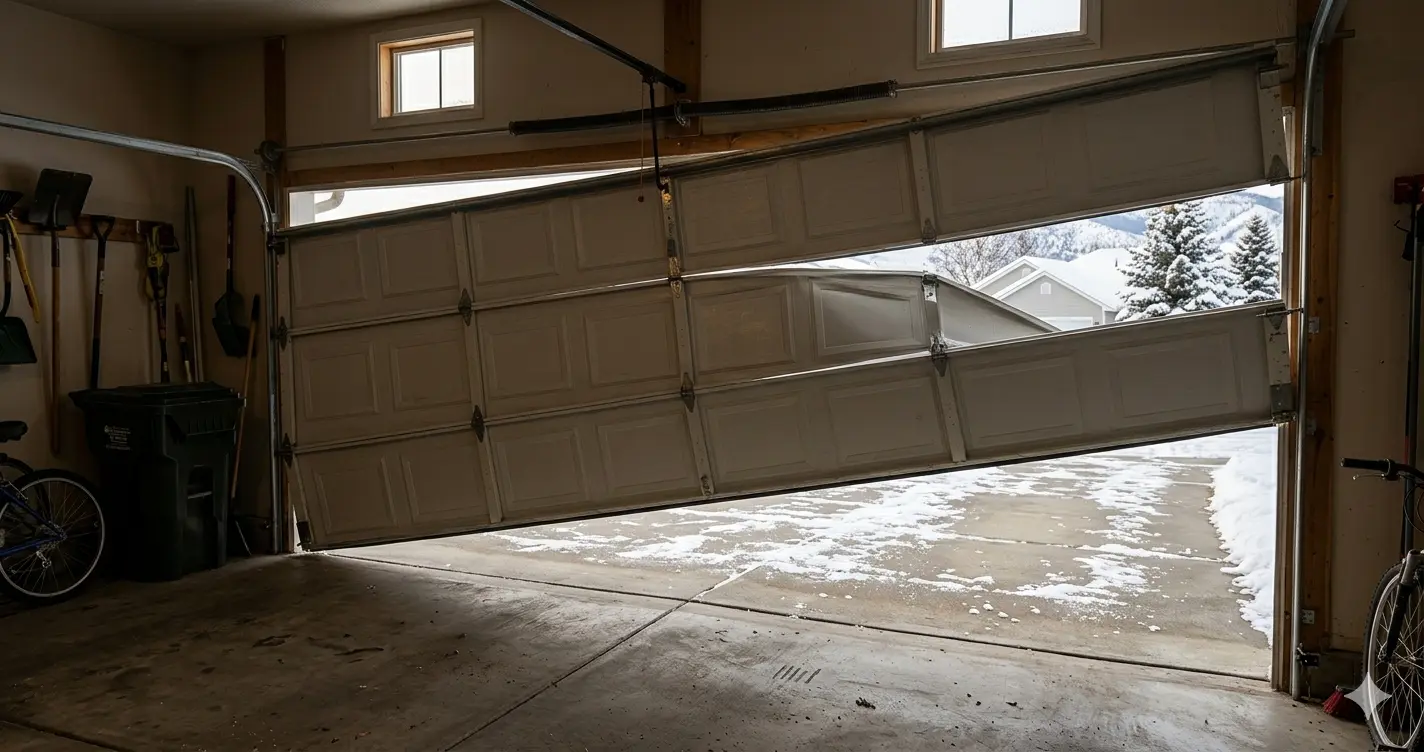
Your garage door cycles about 1,500 times a year — four times a day — running its full 200–400 lb weight across the surface of your rollers every single time. When rollers work, you barely notice them. When they fail, the door tells you loudly: grinding, vibration, shaking, jerking — and eventually track damage, off-track failures, and accelerated wear on every connected part.
In Billings, Montana’s temperature cycling, sub-zero winters, and summer heat wear rollers noticeably faster than national averages. That’s why we assess the complete roller system on every call — not just the one roller that’s obviously failing — because roller wear is almost always system-wide, not a single-roller problem.
Understanding Garage Door Rollers in Billings
Every sectional door has 10–14 rollers riding inside the track. They carry the door’s full weight, guide it through the curved section, and hold it steady side-to-side. When they wear, every cycle gets harder on the track, hinges, springs, cables, and opener.
What’s Inside a Roller — and Why the Bearing Decides Everything
No Bearing
The stem rotates directly in the bracket hole. Lowest-grade rollers — highest friction, shortest life, loudest operation.
Open Bearing
Ball bearings cut friction, but they’re exposed — Billings dust, grit, and seasonal debris get in and wear them from the outside.
Sealed Bearing
Bearings enclosed in a sealed race — protected from dust, ice, and temperature extremes. Dramatically better in Billings conditions.
Roller Types — the Billings Guide
Steel rollers (most older Billings garages) are durable but the steel-on-steel contact creates the grinding and squealing most homeowners call about — and bottom rollers rust in the damp floor environment, getting suddenly loud after a winter.
Standard nylon rollers run much quieter than steel, but their open stem lets grit into the bearing, accelerating wear.
Sealed-bearing nylon rollers pair the quiet nylon wheel with sealed bearings fully protected from the environment — maximum life, minimum noise, minimum maintenance. This is our standard recommendation for Billings; the modest price difference pays back in service life. Residential tracks use 2-inch rollers with a stem length (typically 4″, sometimes 7″ for low-headroom) matched to your bracket depth — we verify exact specs before installing anything.
Two More Signs Worth Catching Early
The opener strains. When rollers drag instead of roll, friction loads the motor every cycle — it strains audibly and may trigger force-reversal. That’s accelerated opener drive gear wear, turning a ~$150 roller job into a $250–450 opener repair.
Visible damage on inspection. Once a year, with the door open, spin each roller: a healthy one spins smooth and quiet. Look for cracked/chipped nylon, flat spots, a missing wheel, rust on steel wheels, or wobble. Montana’s freeze-thaw also rusts bottom stems until they seize and drag.
Why Rollers Wear Out in Billings
Normal Cycle Fatigue
At ~84,000 rotations per roller per year, standard steel/nylon rollers last ~7–8 years; sealed-bearing nylon are rated 20,000–30,000 cycles and beyond.
Montana Temperature Extremes
Cold thickens open-bearing grease (more friction on cold mornings), thermal swings fatigue and crack nylon wheels, and moisture freezes bottom rollers solid so they drag.
Lack of Lubrication
Open bearings need periodic lube. Use a silicone- or lithium-based garage-door lubricant on the stem and bearing — never WD-40 (a solvent), and never inside the track (it attracts grit).
Debris & Wrong Specs
Late-summer agricultural dust and winter road sand act like sandpaper in the track; and a wrong stem length edge-loads the wheel, wearing it fast and risking a skip-out. We verify specs every time.
Our Roller Repair & Replacement Process
We don’t just swap the one loud roller and leave. Every roller on the door has seen the same cycles, temperatures, and lubrication — when one fails, others are close behind. Our process:
- 1. Complete system assessment — every roller inspected and spin-tested, plus hinge brackets, track wear assessment, and the bottom-roller floor environment.
- 2. Honest recommendation — full replacement when most rollers are worn, or selective when a specific roller failed on a newer door. We explain which fits your door.
- 3. Sealed-bearing upgrade discussion — the $40–80 difference on a full set that pays back in Montana’s conditions.
- 4. Safe replacement — top/middle rollers with the door open; bottom rollers need cable tension management with professional winding bars, since their brackets are under spring load.
- 5. Lubrication & track cleaning — cold-weather lubricant on stems and pivots, track cleared of debris.
- 6. Full operational test — multiple cycles checked for noise, smooth travel, and normal opener force. We follow DASMA garage door safety guidelines throughout.
Roller Care Specific to Billings, Montana
Pre-winter lubrication. A September–October service puts fresh cold-weather lubricant on every roller before the first freeze — standard summer lubricants can turn dangerously thick at Billings’ winter extremes.
Bottom-roller freeze prevention. Keep the floor around the bottom rollers clear of standing water and ice. If the door feels unusually stiff in the first few inches on a cold morning, stop — don’t force it — a frozen bottom roller may be the cause.
Sealed bearings matter more here. Their temperature-rated sealed lubricant holds viscosity from sub-zero to summer heat, and the seal keeps agricultural dust and road sand out entirely — temperature cycling effects make this a bigger advantage in Billings than almost anywhere.
After hailstorms. Major panel damage assessment and structural vibration can dislodge end-of-life rollers from the track — worth an inspection alongside panel checks.
What You Can Do — And When to Call Us
Safe DIY Maintenance
- Monthly: with the door open, spin each roller — smooth & quiet is healthy
- Lubricate stems/bearings twice a year (before winter & in spring)
- Use silicone or lithium garage-door lube — not WD-40
- Wipe debris from the track groove — never lube inside the track
- Top/middle rollers (door open) are DIY-friendly with a screwdriver & pliers
Call Us When
- Bottom rollers need replacing (spring/cable tension — pros only)
- Multiple rollers are worn (full set is most cost-effective)
- The door is off track — this is an off-track emergency
- There’s track damage, or the opener is straining
- DIY lube didn’t restore quiet, smooth operation (worn bearings)
A quick safety note on bottom rollers
Bottom rollers sit in fixed brackets tied to the lift-cable system, which stays under spring tension in every door position. Replacing them means safely releasing that tension with professional winding bars — the same high-energy work as spring and cable service. Please leave bottom rollers to trained pros. See CPSC consumer safety.
Why Billings Homeowners Trust Us
Whole-System Assessment
We inspect every roller, not just the loud one — so you get an accurate picture before any replacement decision.
Honest Full vs Selective
We tell you clearly when full replacement pays off and when selective is genuinely enough — no over-selling.
Sealed-Bearing Always Discussed
Every job includes a clear cost-benefit on the sealed-bearing upgrade for Montana’s climate — your informed choice.
Same-Day Roller Service
We carry sealed-bearing nylon rollers in standard specs on every vehicle — most jobs done first visit.
Safe Bottom-Roller Work
Bottom-roller replacement is handled with proper winding bars and correct spring-tension management by trained technicians.
Upfront Written Quote
Free assessment and a clear quote — including the standard-vs-sealed cost comparison — before any work. Pairs well with annual maintenance.
Roller Repair Cost in Billings, MT
Among the most affordable preventive services — especially next to the track and opener damage worn rollers cause if ignored. General estimates:
$75 – $125
Lube & Inspection
All rollers serviced — no replacement
$100 – $175
Selective — Standard
1–3 failed rollers, standard nylon
$125 – $225
Selective — Sealed
1–3 rollers, sealed-bearing upgrade
$150 – $275
Full Set — Standard
Complete 10–14 roller set, standard
$200 – $350
Full Set — Sealed
Best long-term value for Montana
+$50 – $100
Bottom Rollers
Added for spring-tension bracket access
Your cost depends on how many rollers, standard vs sealed bearing, single vs double-car door, whether bottom-roller access needs tension management, and any track service needed. A full roller-and-track service runs about $175–$375. We always provide a free written quote — including the standard-vs-sealed comparison — before starting.
Frequently Asked Questions
Roller Repair Service Areas — Billings, MT
We provide same-day roller assessment and replacement throughout Billings and Yellowstone County. See our all Billings service areas.
Billings areas: Downtown, Heights, West End, South Side, Rimrock, Shiloh, Poly, Airport Area, North Park, Village, and Billings West.
Surrounding communities: Lockwood, Laurel, Worden, Huntley, Columbus, Hardin, Broadview, and Molt.
Service ZIP codes: 59101, 59102, 59104, 59105, 59106.
Noisy or Rough Garage Door in Billings? Call Us Today.
Worn rollers only get worse — more track wear, more opener strain, and rising off-track risk the longer they run. Same-day roller assessment, honest recommendations, and professional installation across Billings and Yellowstone County. Call (406) 998-1481 and we’ll have your door rolling quietly again today.